

Sam Fender has handed over the full amount of his £25,000 Mercury Prize winnings to the MVT, which functions to protect the United Kingdom's independent live music spots.
Fender was awarded the prize on October 16 as his latest record his work was chosen as the outstanding release of the previous year.
He has chosen to donate the funds to the Music Venues Trust, in acknowledgment of the essential function local spots played in his initial steps.
"I wouldn't be doing what I am doing today if it weren't for all the performances I performed around the North East, and further afield, when I was beginning," remarked the artist. "These spaces are legendary, but they are in difficulty."
Beginning in 2023, more than 150 of these venues have permanently closed – approximately 16 percent of the whole industry in the UK.
In the last year, top acts such as Pulp, the group Coldplay, the singer Katy Perry and Ed Sheeran have all backed the Music Venues Trust in its attempts to support the industry, by including a modest fee to their ticket prices, which benefits local stages.
Sam Fender also took part, raising more than £100,000 on his recent tour to support 38 small stages across England, Scotland, and Wales.
The money supported locations that were facing potential shutdown due to challenges stemming from water damage, fires and bereavements, as well as permit problems, legal disputes and neighbor objections.
Other venues received funding support in upgrading infrastructure and technical equipment that directly benefitted musicians and fans.
"The notion that revenue from concerts in large arenas backs the smaller venues, where it kicks off for musicians like me, is just sensible," Fender has stated.
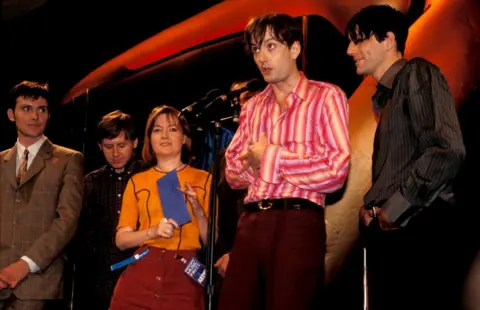
The musician is not the first artist to donate his Mercury Prize prize money to charitable organizations.
Back when Pulp earned the trophy in the year 1996 for their release Different Class, frontman Cocker announced that the act would give their prize money to the charity War Child.
In 2002, musician the artist divided her bounty between a few good causes, like the NSPCC and a charity for Sickle Cell.
"Additionally, I contributed a grand to the center, to their gymnastics program, because I practiced gymnastics when I was growing up and they required updated gear," the artist explained to a publication.
Previously, they contributed their prize money to the youth organization that developed their act, as well as other grassroots music organisations.
Additionally 1994 winners the group gave their award to a multiple sclerosis charity after a close contact was identified with the condition.
"Receiving the award was quite enough," said artist Heather Small. "The prize was the bonus but we didn't need the bonus, because we had the main prize. So our winning touched another person's life."
Last week, the trust announced it had rescued two grassroots venues in south-east England, by placing them under local control.
The first in Southampton and The Croft in the city were acquired under the community ownership initiative, which is supported by the arts council and enthusiasts who buy "shares" in the venues.


